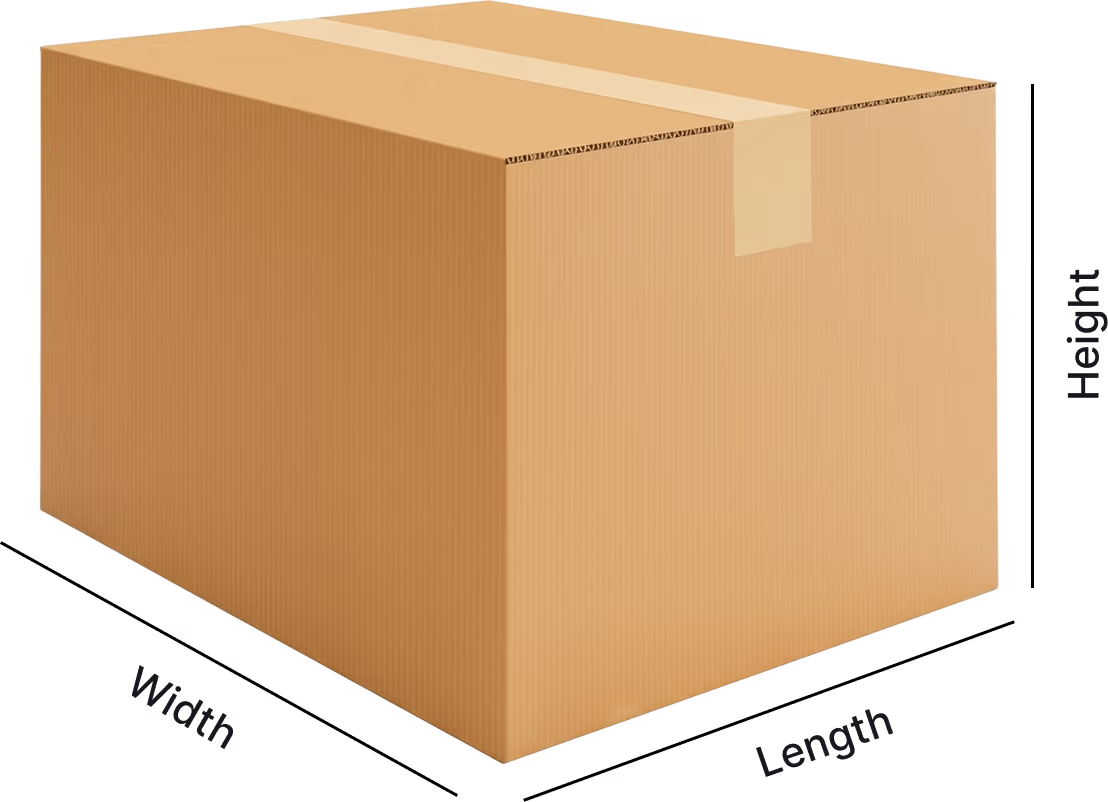



Know Your Chargeable Weight Before You Ship
Shipping costs are not always based on the actual weight of a parcel. If there is a large package that is relatively light, the space it occupies during transit can be more important than its actual weight. This is why volumetric weight is considered.
Enter package dimensions and weight to find the billed figure.
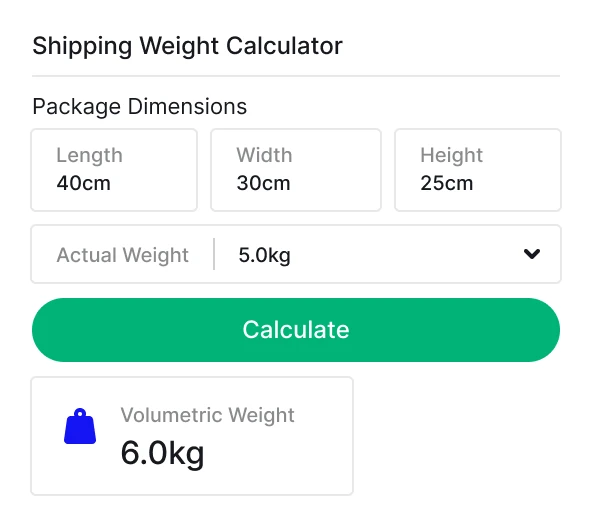
Enter dimensions and weight, then calculate. You are billed on the higher of volumetric and actual weight.
Example, a 40X40X25 cm carton at divisor 5000 → 2.0 kg volumetric, well above its 0.4 kg mass.
What Is Volumetric Weight?
Volumetric weight is also called dimensional weight. It is a way for courier companies to account for the amount of space a parcel occupies during transportation.
Consider two packages. One is small and heavy, while the other is large and filled with lightweight items. Although the second package may weigh less on a scale, it can take up considerably more room in a delivery vehicle or aircraft. Couriers therefore use the dimensions of the package to calculate another weight figure.
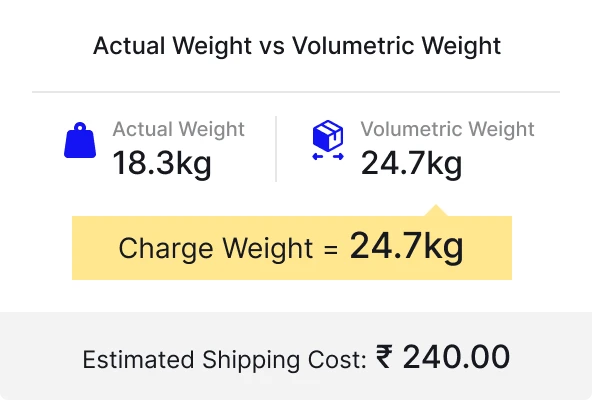
The courier compares the actual weight with the volumetric weight. The higher of the two is mostly treated as the chargeable weight.
For example, a parcel measuring 40 × 40 × 25 cm has a volume of 40,000 cubic centimetres. With a divisor of 5000, its volumetric weight is 8 kg. If the parcel actually weighs only 2 kg, the volumetric figure is higher and may be used for billing.
This is why packaging matters when you are trying to manage shipping costs. A large amount of empty space can increase the chargeable weight even when the product itself is lightweight.
How Is Volumetric Weight Calculated?
The calculation is straightforward. You just need to multiply the length, width and height of the outer package and divide the result by the courier's volumetric divisor.
Volumetric Weight = (Length × Width × Height) ÷ Divisor
When using the standard calculation in this tool, dimensions are entered in centimetres and the resulting weight is shown in kilograms.
The divisor can vary depending on the courier, shipping service and route. The calculator therefore allows you to select a divisor rather than assuming that one figure applies to every shipment.
Consider an example:
40 cm × 40 cm × 25 cm ÷ 5000 = 8 kg
Once the volumetric weight is calculated, it is compared with the parcel's actual weight. If the actual weight is 5 kg and the volumetric weight is 8 kg, the chargeable weight would be based on the higher figure, which is 8kg
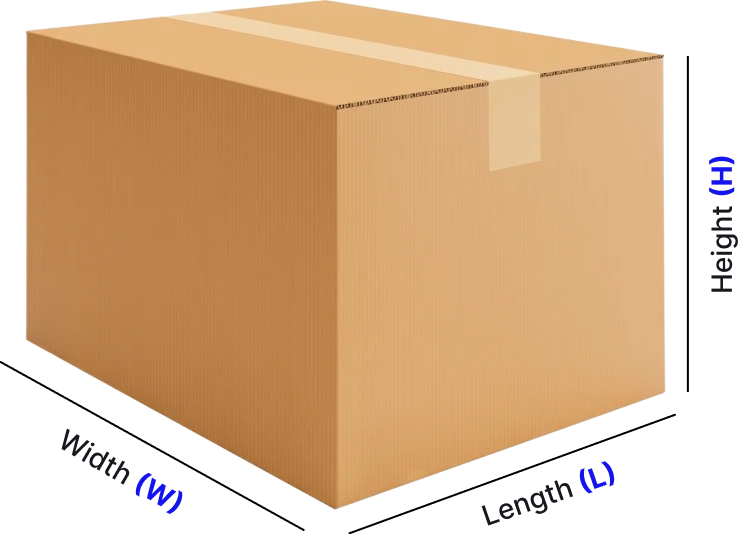
Dimensions in centimetres. The divisor is set by the courier - 5000 covers most domestic express movements. Divide the volume in cubic centimetres by it to get weight in kilograms.
Stop Paying For Air
A parcel may be light on the scale but still take up valuable space during transit. These three simple steps can help you understand your chargeable weight and avoid paying more than necessary.
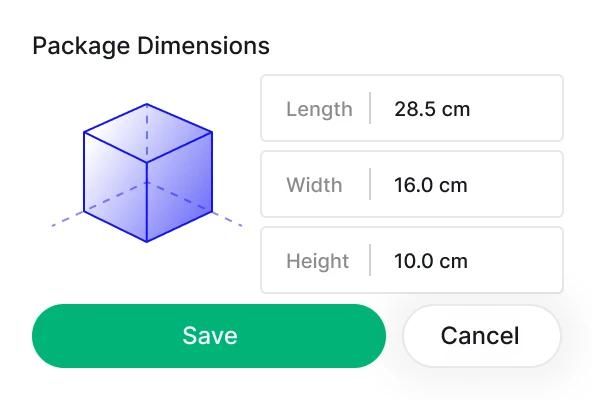
the package
Measure the fully packed parcel’s length, width and height. Use the outer dimensions, which includes the packaging and any extra space.
weights
Enter the dimensions and actual weight into the calculator, which will work out the volumetric weight and show you which figure is higher.
chargeable weight
Use the higher of actual and volumetric weight as your chargeable weight. Check it before dispatch to estimate your shipping cost more accurately.
Weight Discrepancies, Closed at Source
Knowing your chargeable weight before dispatch helps you plan shipping costs and reduce surprises during billing. QuickShift brings your shipping operations together and offers you better visibility across shipments and courier partners.