


What is your real fulfilment cost per order?
Most sellers only see one number on a fulfilment invoice, and it rarely matches what they expected. This calculator breaks that number down using your monthly order volume, average product weight and packaging type, so you know your cost per order before you get on a call.
Enter your volumes and packaging to see the cost per order.
Indicative estimate. Your contracted rate is set in your QuickShift agreement.
Three components, not one bundled number
Your fulfilment cost has three separate parts. A single fulfilment fee usually hides three different costs: storage, handling and packaging. QuickShift prices each one on its own, based on how your business actually operates, not on a flat blended rate.
When a quote comes as one number, you can't tell which of these four is pushing your fulfilment cost per order up. Line-item pricing shows you exactly which one to fix.
The gaps most brands never see coming
A small gap in any one component looks harmless on paper. Multiplied across thousands of orders a month, it becomes a real hit to margin.
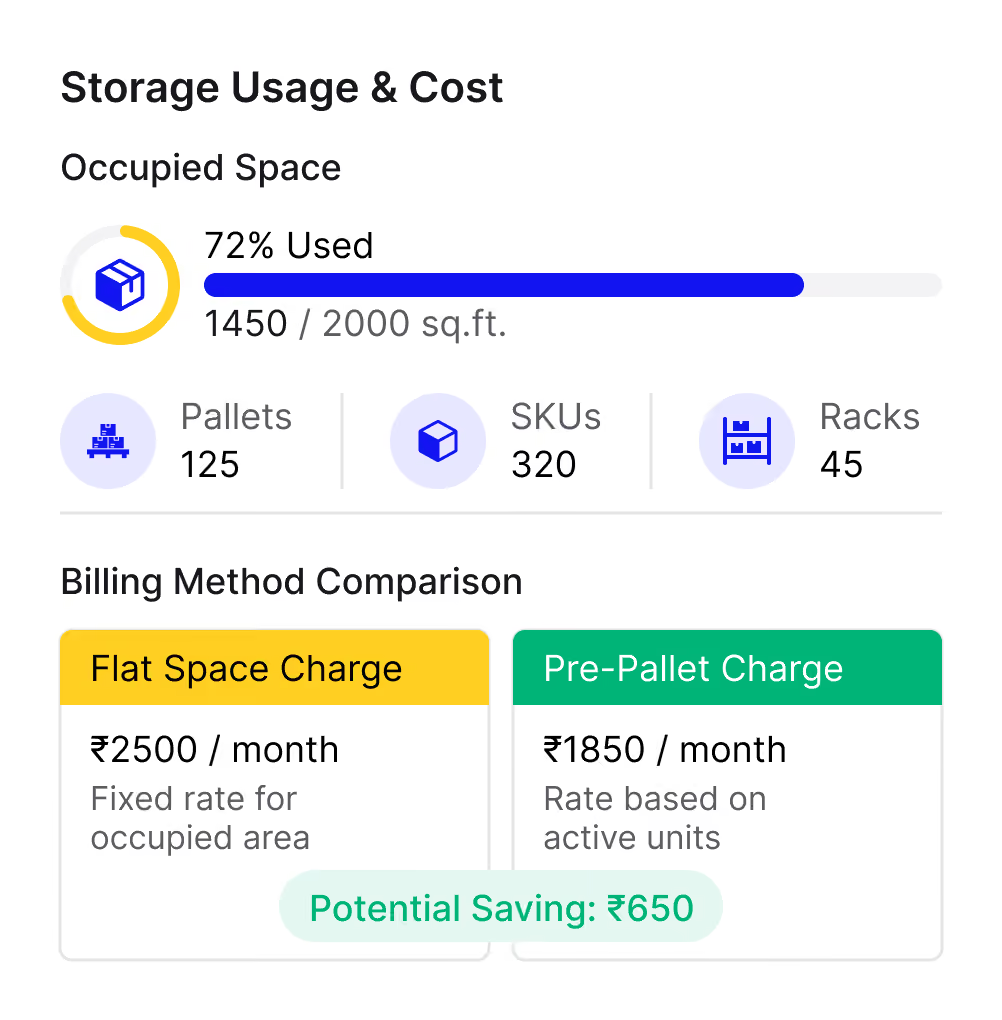
Flat square-footage billing overcharges brands with fast-moving, low-footprint SKUs. Storage priced pallet-wise, unit-wise or rack-wise reflects what you're actually storing, not just the space you occupy.
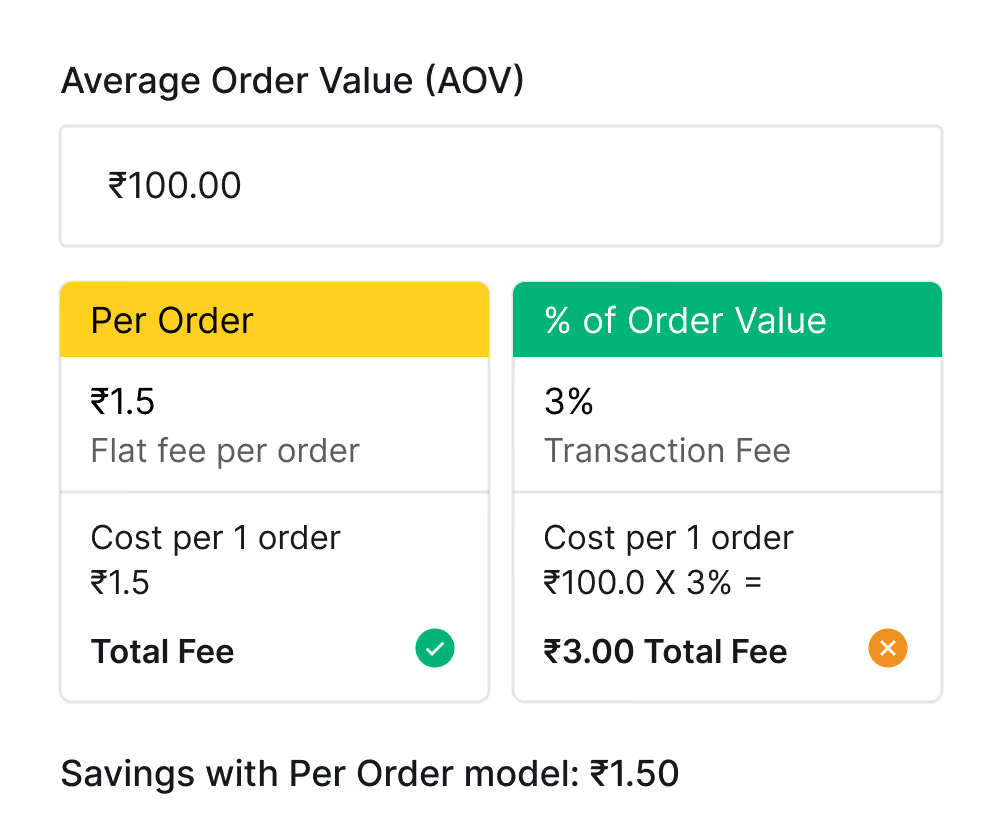
A fixed fee per order may work better for brands with lower-value orders, while a percentage-based model can make more sense for higher-value orders. If the pricing model does not suit your average order value, the extra cost can slowly eat into your margins, even when the quoted rate looks attractive.
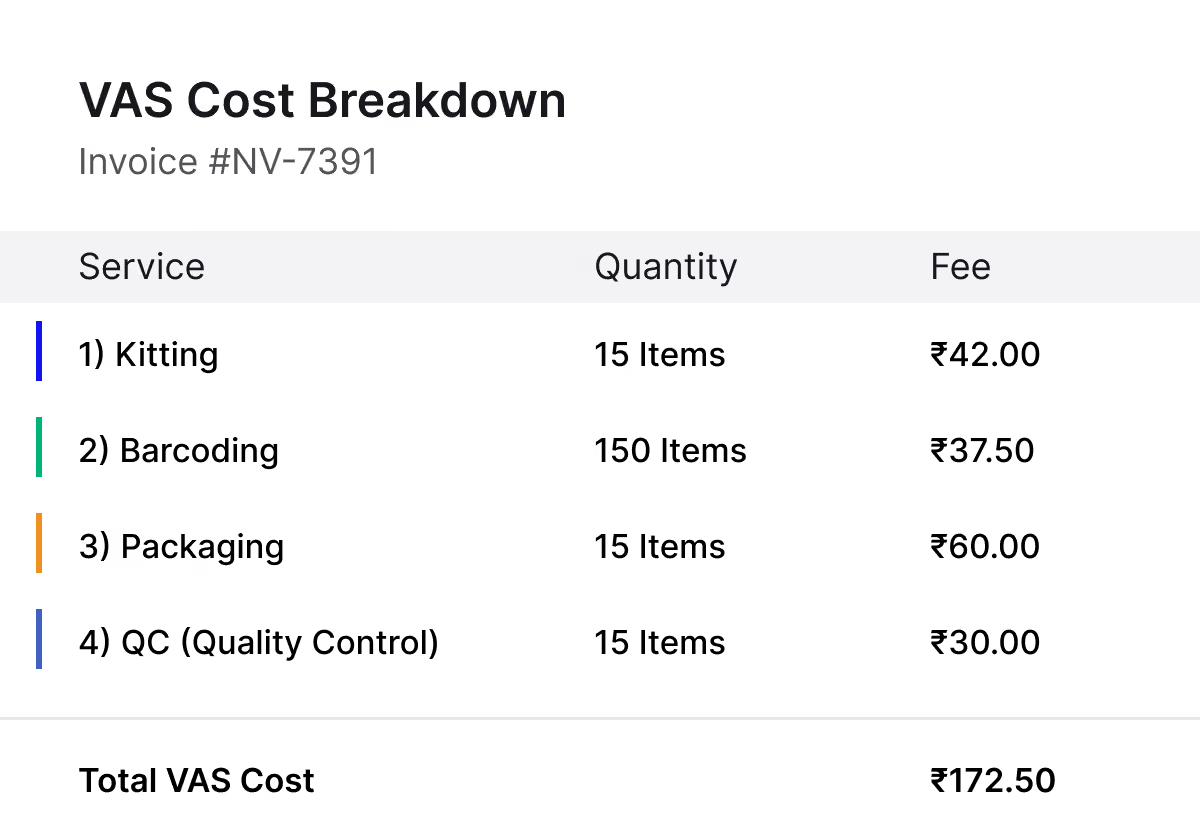
Kitting, barcoding, packaging and QC often get folded into one unclear handling line. When these value added services aren't itemised, it's hard to tell which activity is actually driving your cost up.

Every fulfilment cost, listed as its own line
QuickShift bills storage, per-order handling and every value added service separately, matched to your SKU mix and order profile. Nothing gets folded into one opaque fulfilment fee, so you always know which component to optimise first.
Storage priced pallet-wise, unit-wise or rack-wise
Per-order handling matched to your actual order profile
Kitting, barcoding, packaging and QC priced separately
Ways to reduce your fulfilment cost
Most fulfilment cost problems do not arise from the underlying rate. They arise from a mismatch between how you're billed and how you actually operate.
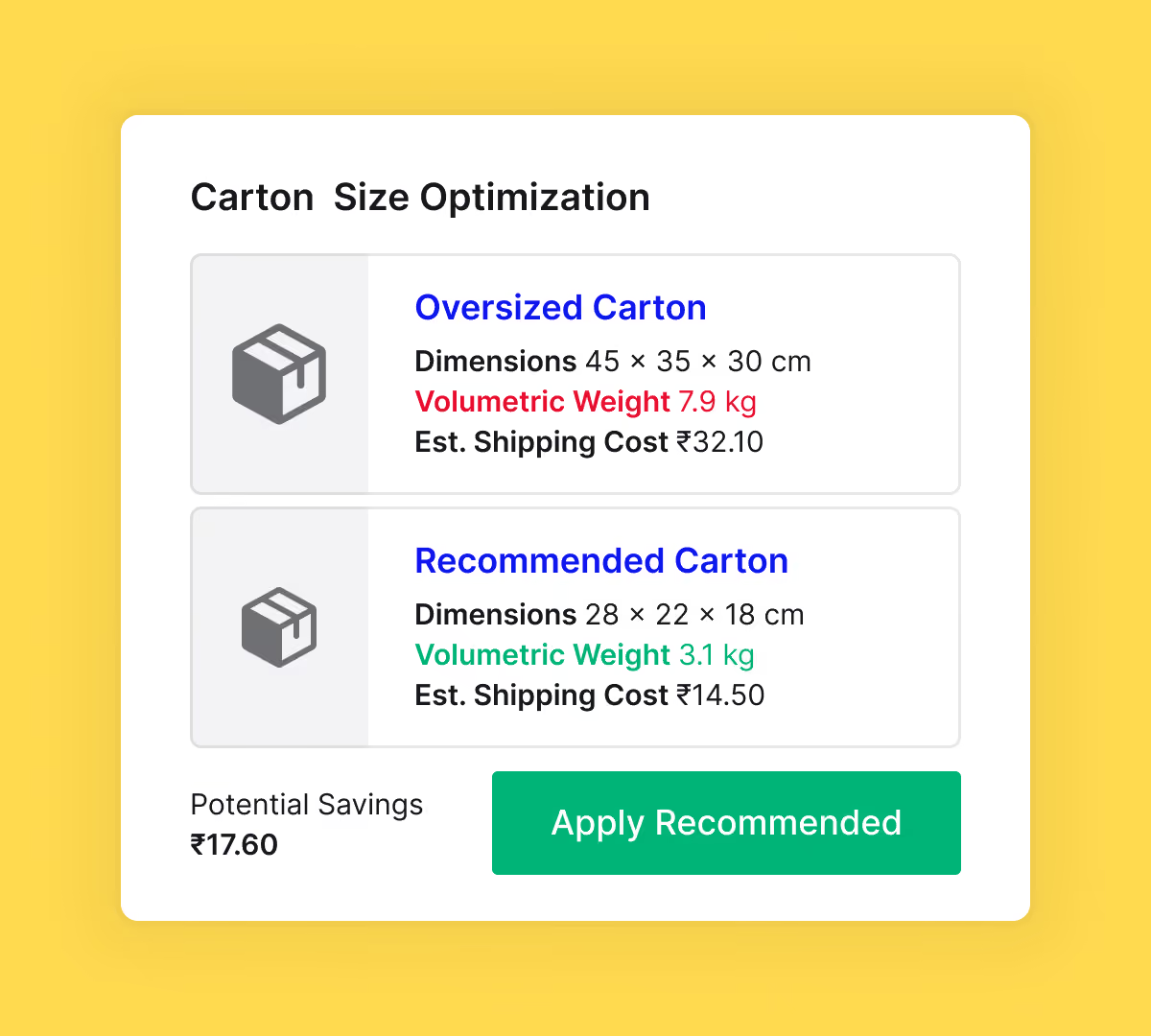
Packaging cost and outbound shipping cost both increase with box size. Keep an eye on the volumetric weight and catch oversized cartons before they eat into your margin.
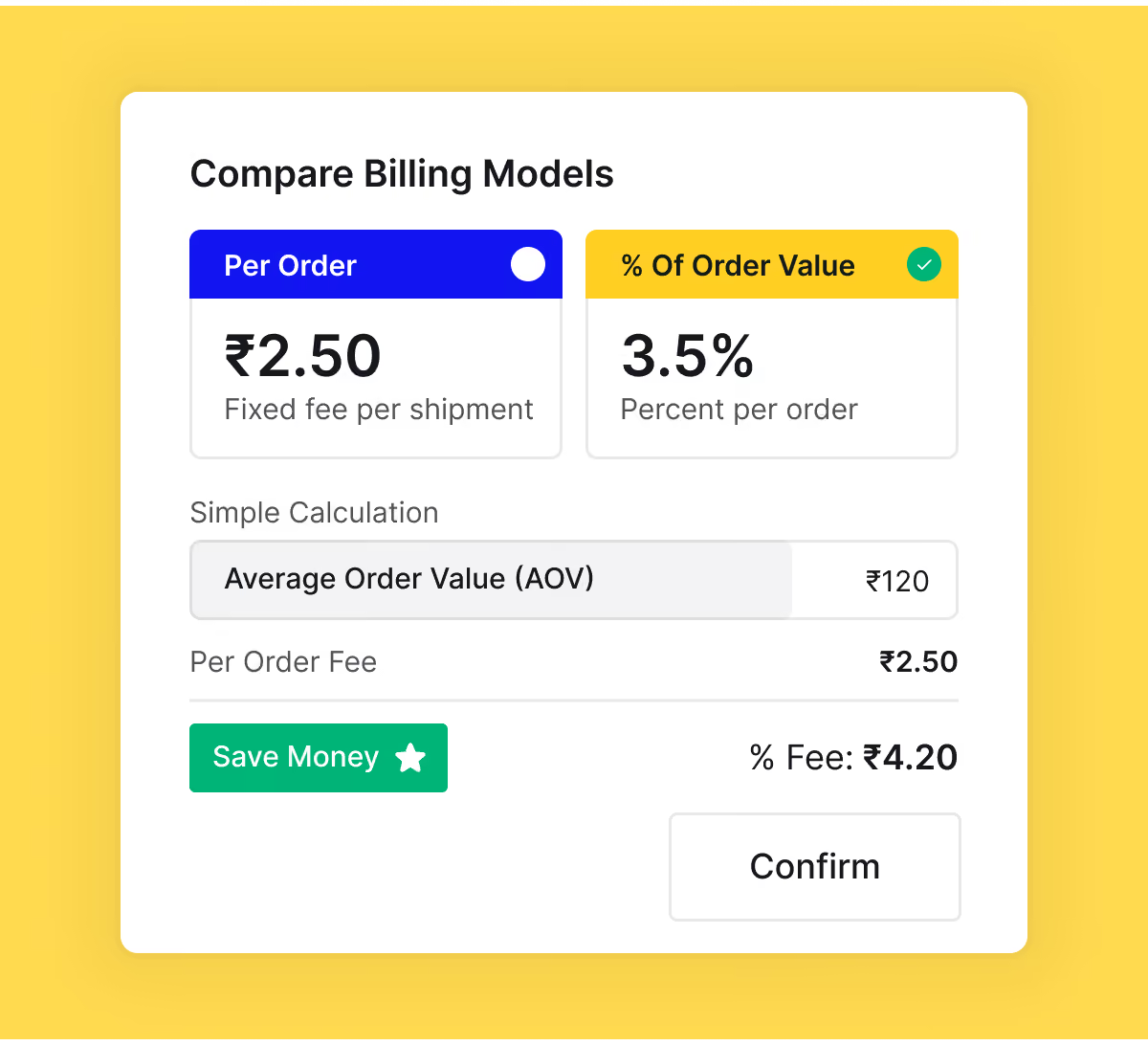
High-AOV brands usually do better on a flat per-order fee. Low-AOV, high-volume brands generally save more on a percentage of order value. Ask your account team to model both against your real order data.
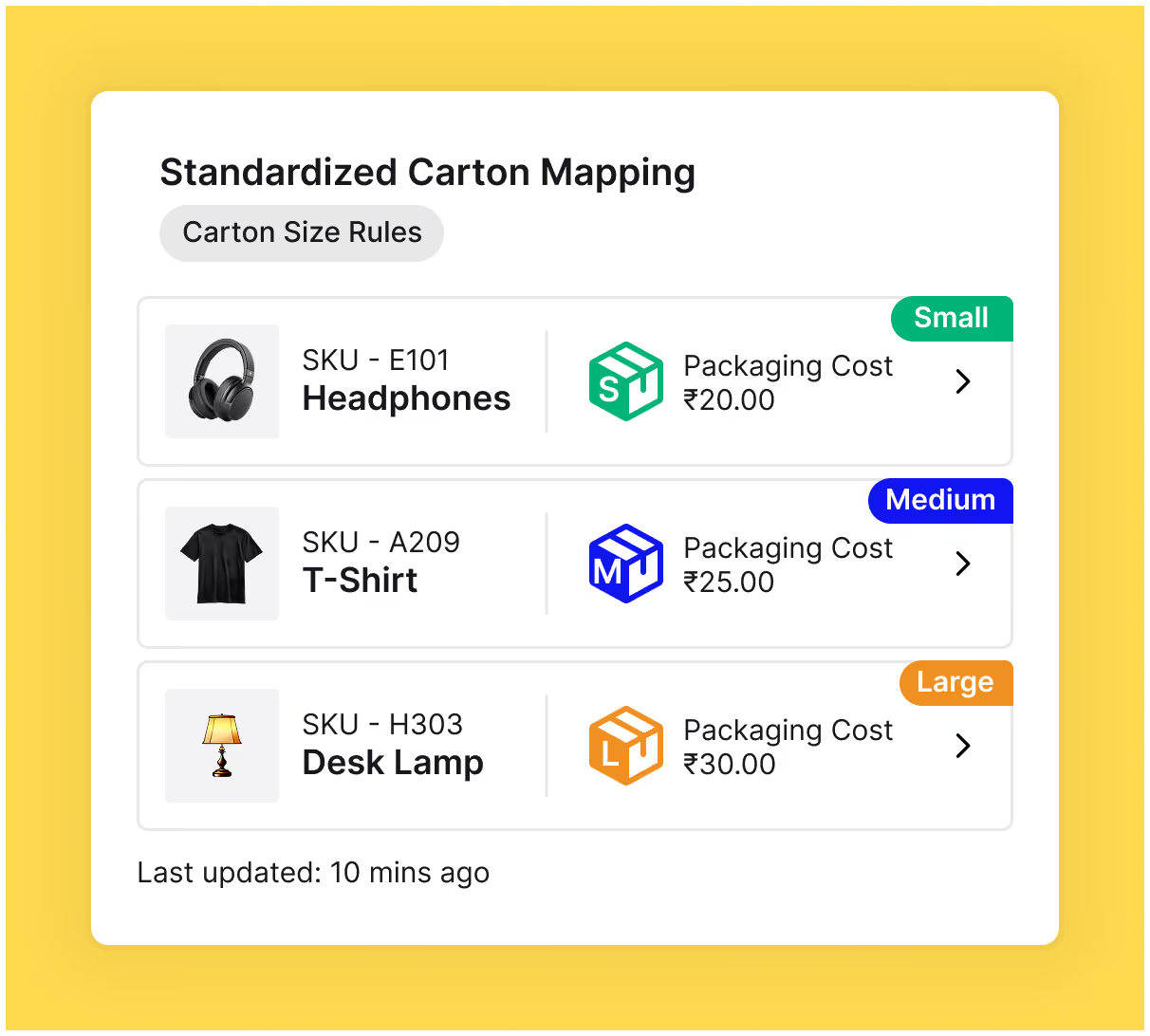
Picking whatever box is nearest drives up packaging cost and makes it hard to forecast. A fixed carton per SKU keeps packaging cost predictable at scale.
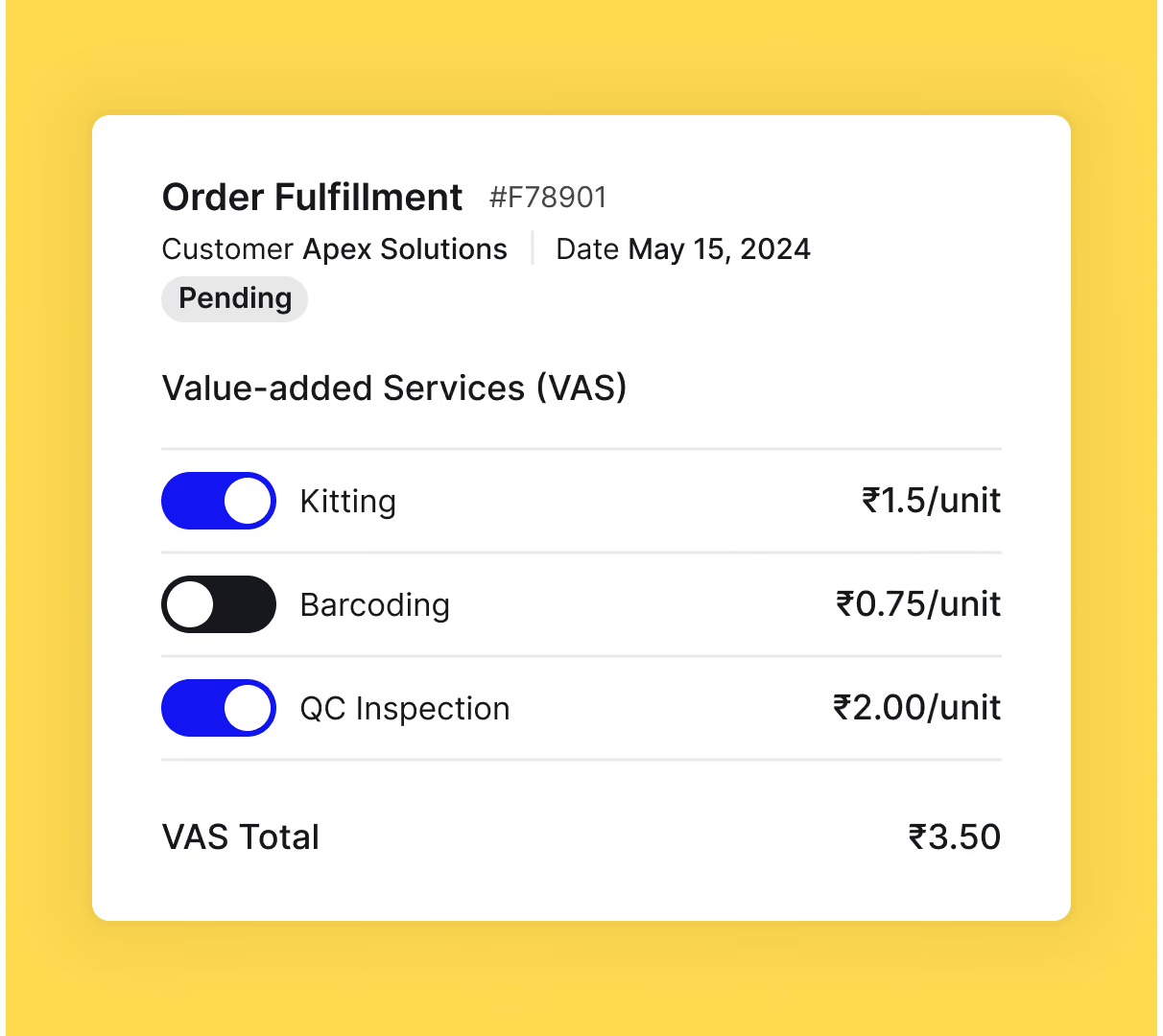
Kitting, barcoding and QC each carry their own line item. Apply only what a SKU genuinely needs, rather than running every VAS on every order by default.
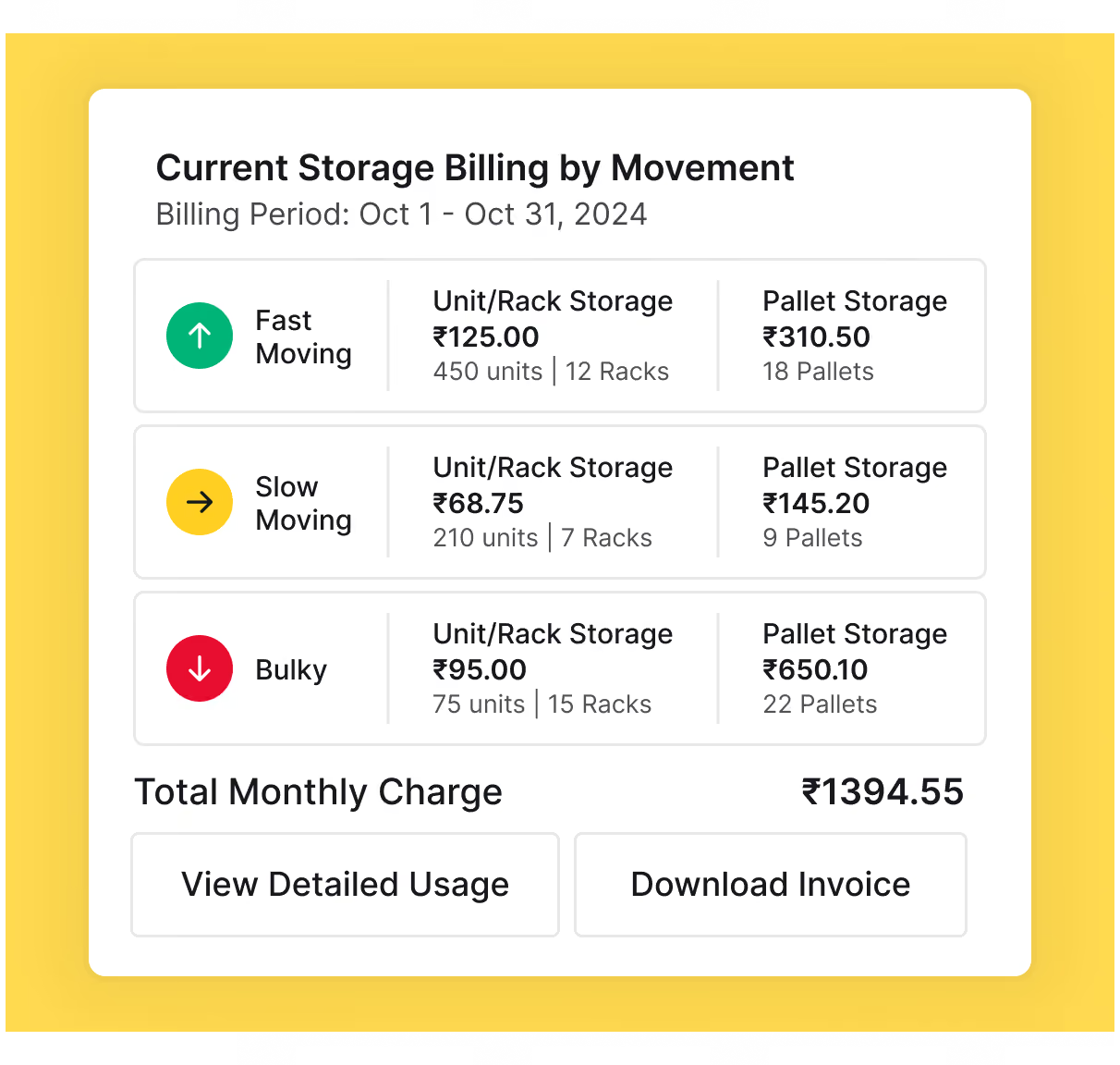
It’s best to use a billing model based on how fast the SKUs move. For quick-selling SKUs, unit-wise or rack-wise storage makes more sense. On the other hand, for slower-moving or bulky products, pallet-wise storage works better.
Fulfilment cost calculator FAQ
Straight answers on the channel, setup, data, pricing and support.
What does this fulfilment cost calculator actually estimate?
It estimates your per-order fulfilment cost across three components: storage and inbound-outbound handling, pick and pack handling based on product weight, and packaging cost based on packaging type. Multiply that by your monthly orders and you get an indicative monthly fulfilment spend.
Is this the same as my final QuickShift quote?
No. This is an indicative estimate built on three inputs. Your final quote factors in your actual SKU mix, order profile, storage duration and any value added services you need, so it will be more precise than this calculator.
Does fulfilment cost include storage?
Yes. Storage and inbound-outbound handling is one of the three components in this estimate, along with pick and pack handling and packaging cost. On your actual invoice, storage is billed and shown as its own separate line.
Why does packaging type change my fulfilment cost?
Packaging choice can also change the cost. A polybag is usually quicker to pack and needs less material. A corrugated box takes more material, and adding bubble wrap for fragile or high-value products means extra packing work too. As a result, boxed orders can have a higher packaging cost per order.
How can I lower my fulfilment cost per order?
Start with packaging size, since oversized cartons raise both packaging and outbound shipping cost. Then check whether your billing model matches your average order value, and whether your value added services are limited to what each SKU actually needs.
Is there a setup fee to start fulfilment with QuickShift?
This varies by order volume and the complexity of your catalogue. Speak with the QuickShift team for a rate card specific to your business, including any onboarding or setup costs.
How accurate is this estimate compared to my actual fulfilment cost?
This calculator gives a directional number based on average inputs. The actual cost can vary based on your specific SKU dimensions, storage duration, order profile and any value added services you use. Use it to get a ballpark before requesting a full rate card.
What information do I need to get an accurate fulfilment quote from QuickShift?
Your monthly order volume, average product weight and dimensions, packaging preferences, average order value and any special handling needs like kitting, barcoding or QC. The more of this you share upfront, the closer your rate card will be to your actual cost.
Stop guessing at your fulfilment cost
Talk to QuickShift about a fulfilment rate card priced component by component: storage, per-order handling and every value-added service listed separately.